
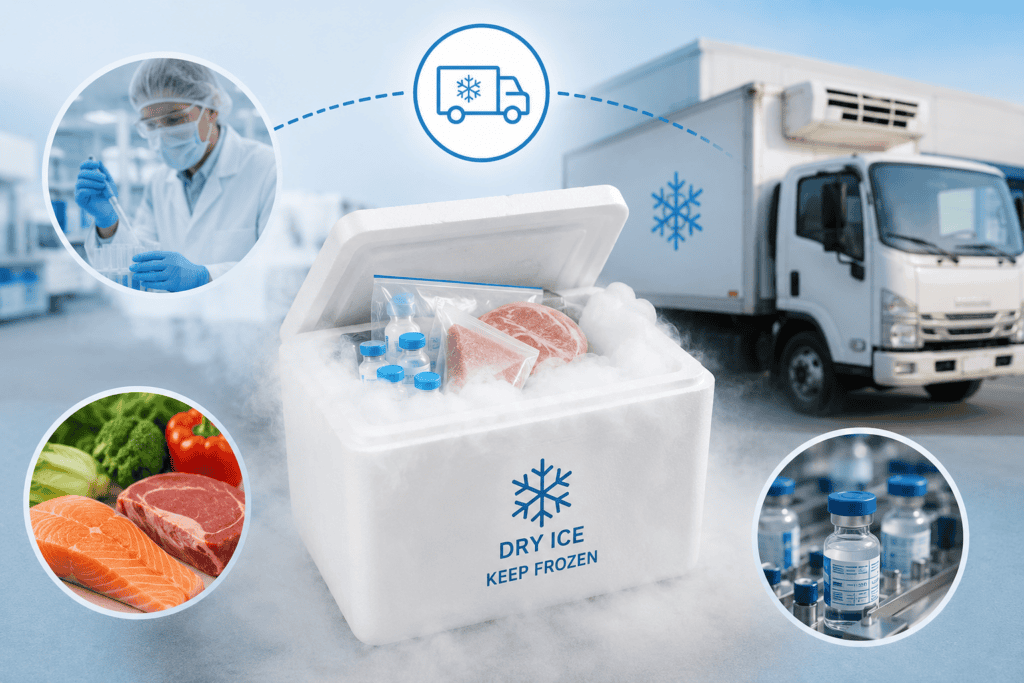
There are several challenges involved with transporting time-sensitive products, with very little room for error. If there is a small change in conditions, it can be detrimental to medicines, food items, lab samples, and other materials which ordinarily require careful handling through the entire process.
Today’s logistics networks are wider and more layered than before. A product can spend days or weeks between transport, storage, and loading points before it reaches the end customer. During that time, temperature control is not a minor detail. It is one of the main things protecting quality.
Cold chain dry ice solutions provide an ideal way to ensure this. These solutions are being used by many businesses that require dependable low-temperature protection. When timing, distance, or product sensitivity leaves no room for error, dry ice can support shipments.
When temperature-sensitive stock is stored or moved in the wrong conditions, the damage does not stop at the product. The business may have to write off stock, resend orders, refund customers, and answer for the mess afterwards. Better temperature control helps lower that risk before it turns into a bigger cost.
Understanding Cold Chain Logistics
Some products can’t be handled like ordinary cargo. This is where cold chain logistics give a more controlled environment in terms of temperature.
This is crucial in the following industries:
- Frozen goods and drinks
- Vaccines and medical supplies
- Lab samples and biotech materials
- Agriculture
- Floral distribution
- Seafood and meat exports
- Vaccine transportation
When cold chain failures occur, the consequences can include:
- Spoiled inventory
- Compliance violations
- Customer dissatisfaction
- Financial losses
- Reputational damage
Supply chains are harder to manage now, and late or rushed deliveries leave little room for cooling problems. Businesses need systems that won’t quit halfway through the job.
We supply dry ice for transport and polystyrene containers for safe storage.
Why Dry Ice Matters in Cold Chain Delivery
Water ice is not always the answer in transport. Once it melts, you have damp cartons, loose labels, and a wet mess around the goods. Dry ice avoids that. It is made from carbon dioxide, sits at about -78.5°C, and turns back into gas as it warms.
Key advantages include:
A colder option for frozen deliveries
Some products do not forgive a warm spell in transit. Dry ice gives stronger cooling than gel packs, so it is used when the goods need to arrive frozen, not softened around the edges.
No water residue
With regular ice, water collects somewhere. With dry ice, it does not. It turns into gas, which is one reason it is used for parcels where moisture could damage the goods or the packaging.
Made for longer cold-chain trips
Dry ice makes sense when frozen goods need to travel farther than a standard cold pack can manage. Packed well, it can protect the load for longer routes and export deliveries.
Fewer fridge units to manage
Dry ice can replace or support powered cooling in certain shipments. That can make sense when the product needs cold conditions, but a full mechanical setup would be too much.
The Industries Using Dry Ice for Cold Freight
For frozen food orders
Dry ice is used when food needs more than a normal cold pack. It helps frozen and chilled goods stay in better condition during transport, especially on longer routes or deliveries with several stops.
Common applications include:
- Frozen foods
- Seafood
- Meat products
- Dairy products
- Meal kit delivery
- Ice cream logistics
A colder, better-controlled trip means fewer damaged products and more time before the goods expire.
Cold packing for medical stock
Medicine is not like general freight. If it warms up during transport, the damage is not always visible, but the product may already be spoiled. Dry ice helps maintain strict temperature ranges during:
- Vaccine distribution
- Clinical trial shipments
- Laboratory sample transport
- Biotech product delivery
- Medical specimen handling
In healthcare and pharma, cold transport is not only about protecting the product. It also helps prove the goods stayed within the required temperature range.
eCommerce and national distribution
Home delivery has made cold chain planning harder for online retailers. They need packing, storage, and transport that can handle more orders without letting products warm up on the way.
Dry ice enables businesses to:
- Ship frozen or chilled products nationally
- Less risk when couriers are late
- Fewer complaints after delivery
- Expand geographic reach
A business can start with smaller cold shipments first, instead of buying refrigerated trucks straight away.

How Steady Cold Helps Cut Product Loss
Cold chain dry ice solutions help cut product loss, especially when goods can spoil during a warm stretch in transit
Products can spoil due to any of these reasons:
- Temperature dips and spikes
- Transit delays
- Inadequate packaging
- Equipment failure
- Repeated loading and unloading
Once a shipment leaves, the box must deal with loading bays, vehicle changes, delays, and warm air every time it is handled. Dry ice helps the inside of the package remain colder for more of the trip.
This can help with:
- Lower product rejection rates
- Fewer customer complaints
- Reduced returns and replacements
- Less stock lost to temperature damage
When the product is expensive, small spoilage cuts still matter. Losing a little less stock each month can mean a lot of money saved by year-end.
Dry Ice in Cold Chain Operations: Cost Centre or ROI Protector?
The price of dry ice is only one part of the calculation. If it helps a shipment arrive in better condition, the value can be much higher than the line item on the logistics invoice.
Fewer losses from spoiled goods
When stock spoils in transit, the loss is not only the item in the box. It can mean a replacement order, extra admin, unhappy customers, and lower margins. Reducing spoilage helps protect more of the sale.
Fewer ruined orders
The worst part of a failed cold delivery is not only the lost product. It is the refund request, the photos from the customer, the replacement order, and the time spent fixing it. Better cooling in the box helps reduce those messy after-delivery problems.
Lower power use during transport
Dry ice can help during those awkward gaps between warehouse storage and delivery. The goods still need cooling, but not always a powered fridge. In those cases, dry ice can reduce the time spent using electric refrigeration.
Easier to deal with overflow
A busy day, a late courier, or a larger shipment can put pressure on cold storage. Dry ice gives teams another way to protect goods while they sort out packing, dispatch, or temporary overflow.
Less damage to your reputation
If the order turns up warm or damaged, the buyer does not sit there thinking about the courier network. They remember who they paid. Get those wrong enough times, and people stop ordering. For cold goods, the delivery is part of the product.
Dry Ice Practices for Cold Chain Logistics Teams
Good dry ice packing is not guesswork. The team needs to know how long the parcel will travel, how cold the product must remain, what packaging is being used, and how the gas will escape.
Use a box made for cold freight
Insulation is what buys time. It slows the warming inside the package, which means the dry ice does not burn through as quickly and the goods have a better chance of arriving cold.
Check the route before packing
The shipping label may say overnight, but the parcel still must get through handling, storage, loading, and delivery. The dry ice amount needs to account for that full journey.
Ventilation for storage and transport
The safety issue with dry ice is not only the cold. As it warms, it gives off carbon dioxide, which is why storage rooms and delivery vehicles need ventilation.
Make dry ice handling clear
People working with dry ice need the right gear before they touch it. Thick gloves are the main thing, with eye protection where there is any chance of chips, pellets, or splashes from the packaging.
Use a supplier who understands cold shipping
A dependable dry ice supplier makes a difference when everyone is ordering at once. It means stock is more likely to arrive when needed, not after the problem has already started.
What to look for in a cold chain dry ice supplier
Some suppliers are set up for bigger, regular orders. Others may fall short when volume, timing, or transport becomes more demanding.
Choose suppliers based on their:
- Consistent dry ice availability
- Delivery capabilities
- Packaging expertise
- Industry compliance knowledge
- Emergency supply support
- Geographic coverage
A dry ice supplier is not a side detail in cold shipping. If the supply is late, short, or wrong for the job, the whole delivery can be put at risk.
Final Thoughts
A cold shipment rarely fails all at once. It’s usually smaller things piling up: a late collection, a longer route, a box packed a bit too light, or stock sitting warmer than it should for a few extra hours.
That’s where cold chain dry ice solutions still earn their place. Dry ice gives frozen food, medical products, samples, and other sensitive goods more time before heat becomes a problem.
The value is not only in the colder temperature. It’s in fewer write-offs, fewer replacement orders, fewer awkward calls with customers, and less money lost because a shipment arrived in poor condition.
Frequently Asked Questions
What is cold chain dry ice solutions?
Cold chain dry ice solutions are packing and transport methods that use dry ice to keep products frozen or very cold. They are used for goods such as frozen food, medical stock, lab samples, and other items that can spoil or become unsafe if they warm up.
Why is dry ice better than regular ice for logistics?
Dry ice gives shippers colder packing than regular ice, with no meltwater to manage. That is the main reason it is used for frozen or sensitive products. The goods stay colder for longer, and the box is not left wet by the cooling material.
Which industries use dry ice in cold chain logistics?
Food distributors, pharma suppliers, hospitals, biotech firms, seafood exporters, and eCommerce brands all use dry ice for cold chain deliveries.
How does dry ice reduce product spoilage?
Dry ice makes spoilage less likely by giving the product a colder trip from pack-out to arrival.
Is dry ice cost-effective for businesses?
Yes, if dry ice stops even a few spoiled deliveries, the cost can be easier to defend than refunds, replacements, and wasted stock.
How long does dry ice last during shipping?
Dry ice may last for a short trip or much longer freight, depending on the box, the outside temperature, and how much dry ice is used.
Is dry ice safe to use in transportation?
Yes, as long as the shipment allows gas to escape and dry ice safety rules are followed during storage and handling.
You must be logged in to post a comment.